Saturday, March 14, 2009

Important Cases for IP Management


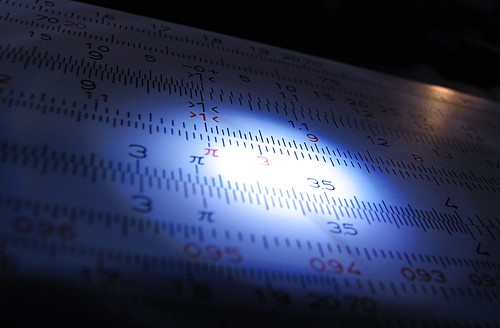
(pi ruler via flickr)

For this years pi-day post, I wanted to list some of the rulings which have most impacted the day to day management of IP. These cases are worth the time sitting down with outside counsel and deeply understanding. Stephen Albainy-Jenei just did a good summary over at Patent Baristas of many of these cases in the context of courts dictating patent reform. Here are a few of the most key:

eBay Inc. v. MercExchange LLC, 547 U.S. 388 (2006) (reversing Federal Circuit)

Permanent injunctions: Rejected “categorical rules” favoring or disfavoring permanent injunctive relief following a nonappealable judgment of infringement. In all cases, courts must retain equitable discretion to consider the merits of a request for permanent injunctive relief based on the traditional “four factor” test. (e^ip note: critical to understand, especially in forming policy regarding non-practicing entities)

KSR v. Teleflex, 550 U.S. 398 (2007) (reversing Federal Circuit)

Obviousness: Rejected, in part, the Federal Circuit’s “TSM test,” which conditioned obviousness on a specific finding of some motivation, teaching or suggestion to combine prior art teachings, in the particular manner claimed. The Supreme Court left intact the TSM test as a general standard for evaluating obviousness but held that TSM is not the exclusive test for establishing obviousness. Instead, the Court endorsed a flexible and expansive approach to the obviousness inquiry in lieu of any rigid or narrow formula.  By making it easier to establish obviousness, KSR makes it more difficult to obtain patent protection in the first instance, and tougher to defend against invalidity challenges post-issuance. (e^ip note: critical to understand in initial claim drafting and prior art analysis)

In re Seagate Technology, 497 F.3d 1360 (Fed. Cir. 2007)    

Willfulness standard: Abandoned long-standing Federal Circuit precedent imposing an affirmative duty of care on accused infringers, and held that willful infringement requires at least a showing of objective recklessness. (e^ip note: takeaway for setting IP policy - objectively reckless is difficult to define, but critical to avoid)

In re Bilski, 88 USPQ2d 1385 (Fed. Cir. 2008)    

Subject matter eligibility of software/business methods: Narrowed the scope of patent-eligible software/business method patents under Section 101 to methods that are either tied to a particular machine or apparatus or that transform a particular article into a different state or thing (the “machine or transformation test”).  Bilski will make it more difficult to obtain patents for such methods and tougher to defend method patents against invalidity challenges and, in the process, drag in non-software/business method inventions including pharmaceutical and biotechnology patents. (e^ip note: software case law is rapidly changing, so software specifications should be able to support a broad range of claim strategies - at least for now, claims need to conform to the Bilski standard)

In re TS Tech, Misc. No. 888 (Fed. Cir. 2008)    

Venue: Ordered transfer of venue from the Eastern District of Texas to the Southern District of Ohio. The fact that vehicles containing the allegedly infringing article are sold in the Eastern District of Texas does not provide a meaningful connection with the venue since such vehicles are sold throughout the United States. Product sales are often the sole basis for asserting venue in this district. (e^ip note: important right now in preventing litigation in popular venues for patent actions, however, may be temporary as patent holding companies become more creative) 

Monday, March 9, 2009

The IP Strategist

An IP Strategist's Perspective: A Reality Check for Entrepreneurs Who Believe they Need a Patent to Protect Their Idea
View more presentations from Jackie Hutter. (tags: ip strategy)
Just saw this on BlawgIT - whether internal or external, look for this kind of deeply invested, somewhat embedded professional to become much more common in business...

Tuesday, January 20, 2009

Our minds are no less inventive...

From today's inauguration speech:
"This is the journey we continue today. We remain the most prosperous, powerful nation on Earth. Our workers are no less productive than when this crisis began. Our minds are no less inventive, our goods and services no less needed than they were last week or last month or last year. Our capacity remains undiminished. But our time of standing pat, of protecting narrow interests and putting off unpleasant decisions - that time has surely passed. Starting today, we must pick ourselves up, dust ourselves off, and begin again the work of remaking America.
For everywhere we look, there is work to be done. The state of the economy calls for action, bold and swift, and we will act - not only to create new jobs, but to lay a new foundation for growth. We will build the roads and bridges, the electric grids and digital lines that feed our commerce and bind us together. We will restore science to its rightful place, and wield technology's wonders to raise health care's quality and lower its cost. We will harness the sun and the winds and the soil to fuel our cars and run our factories. And we will transform our schools and colleges and universities to meet the demands of a new age. All this we can do. And all this we will do."

Thursday, January 1, 2009

e^(ip) will be popular this year?

According to the Washington Post, a trend which will be "in" for 2009 is something called Slow Blogging.

I've spent all 2008 preparing for this. 

Happy New Year everyone. 


Wednesday, December 17, 2008

International TM and Domain Names

Just a quick note on international domain names and trademark issues. 


First, it is becoming more and more common that finance departments are receiving billing from various entities claiming to be the "Register of International Patents and Trademarks" for some small European country. The letters originate from these countries, usually ask for between $2-3,000, and in most way's, do look like an invoice from a government agency.

However, upon inspection, these letters are merely an offer to be listed in a directory of patents and applications and are not affiliated with any government agency. So while it may look like one is paying to be published in some foreign equivalent of the Federal Register, it is in fact, nothing of the sort. And while most every IP professional will catch this immediately, it might be good to let your finance department know that these kinds of documents are floating around out there.  

Second, there has been an uptick in unsolicited e-mails from individuals claiming that third parties are trying to register your domain names in China, Hong Kong, and the like, and that they are contacting you out of courtesy to see if you would like to register them instead. Below is a sanitized version of an actual note:

Dear Manager,

We are OOOOOO, which is the domain name register center in China. I have something need to confirm with  you.    

we have received an application formally,one company named "XXXXXXXX" applies for the domain names (various domin names)  and the internet Brand Name(company name)on the internet Nov 19, 2007. We need to know the opinion of your company, because the  domain names and keywords may relate to the usufruct of brand name on internet.
we would like to get the affirmation of your company,please contact us by telephone or email as soon as possible. Please let  someone in your company who is responsible for trademark or intellectual right contact me freely. 

 Best Regards, 

YYYYYY


Sponsoring Registrar:
OOOOOO
Tel:+00ZZZ-ZZZ-ZZZZ

Fax:+(ZZZ)ZZZZ ZZZZ
Email: YYYYYY@OOOOO.COM
Website:OOOOOO.COM

While there is typically no veracity to these solicitations or claims, these notes usually end up going to high level managers or directors and will bring immediate attention to whether or not you have coordinated with your companies IT department and made sure all your domain names are, in fact, locked up. 

Being prepared for things like this can prevent small annoyances from becoming major time-sinks. 

Cheers,

e^(ip)